In Action on a Mossy Lawn
Two passes in a grid, mowing up after each, for about 2.5 cubic yards of moss and grass bits, and what the tree roots did to the tines.
I used it on two lawns over a long weekend in early October. Both had a massive amount of moss in them.
To swap it on, I undid the bolt on each side, pulled the tilling tines off, put these on, and unbolted the reverse stop arm.
Video: the dethatcher running on a mossy lawn
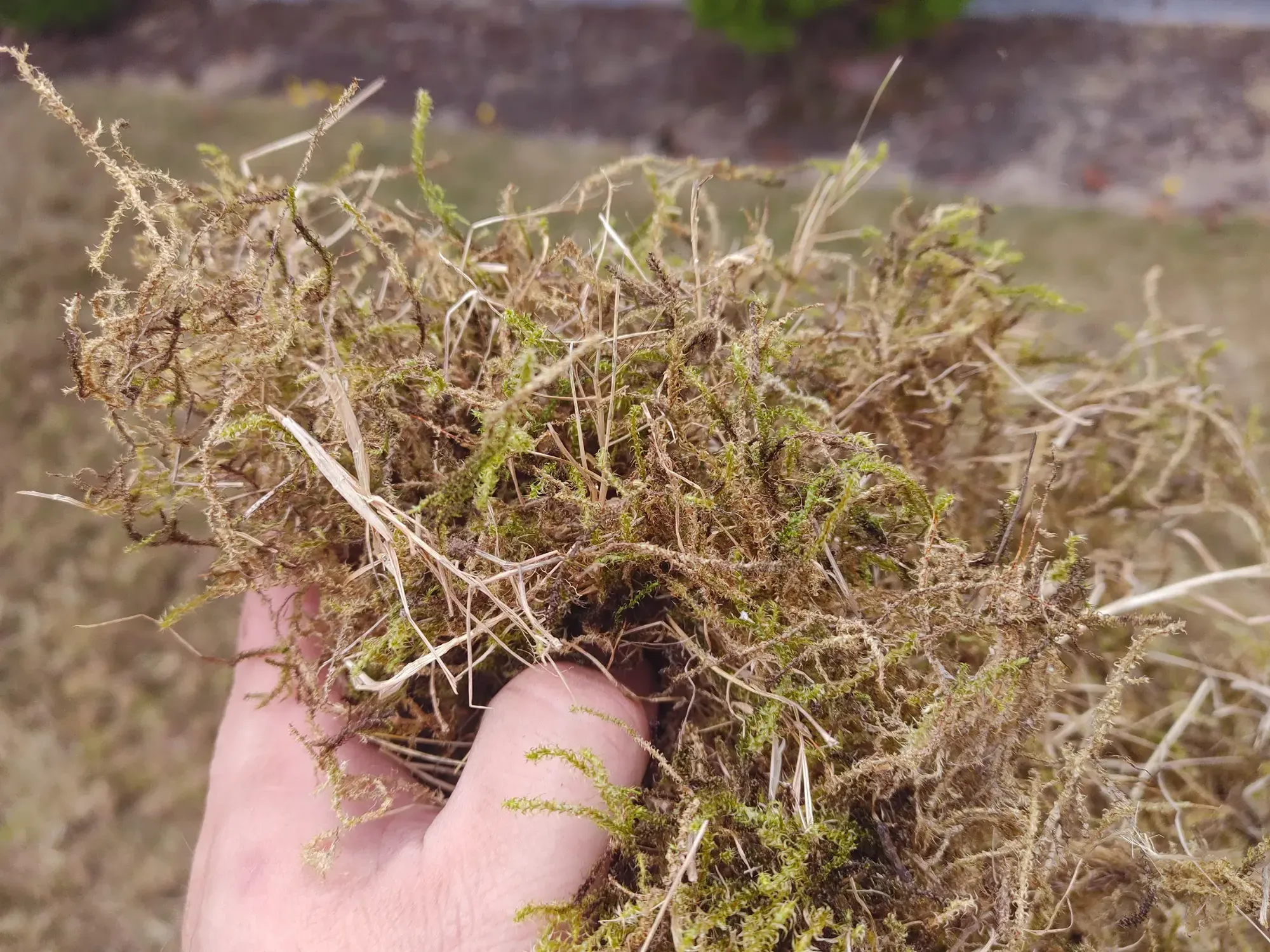
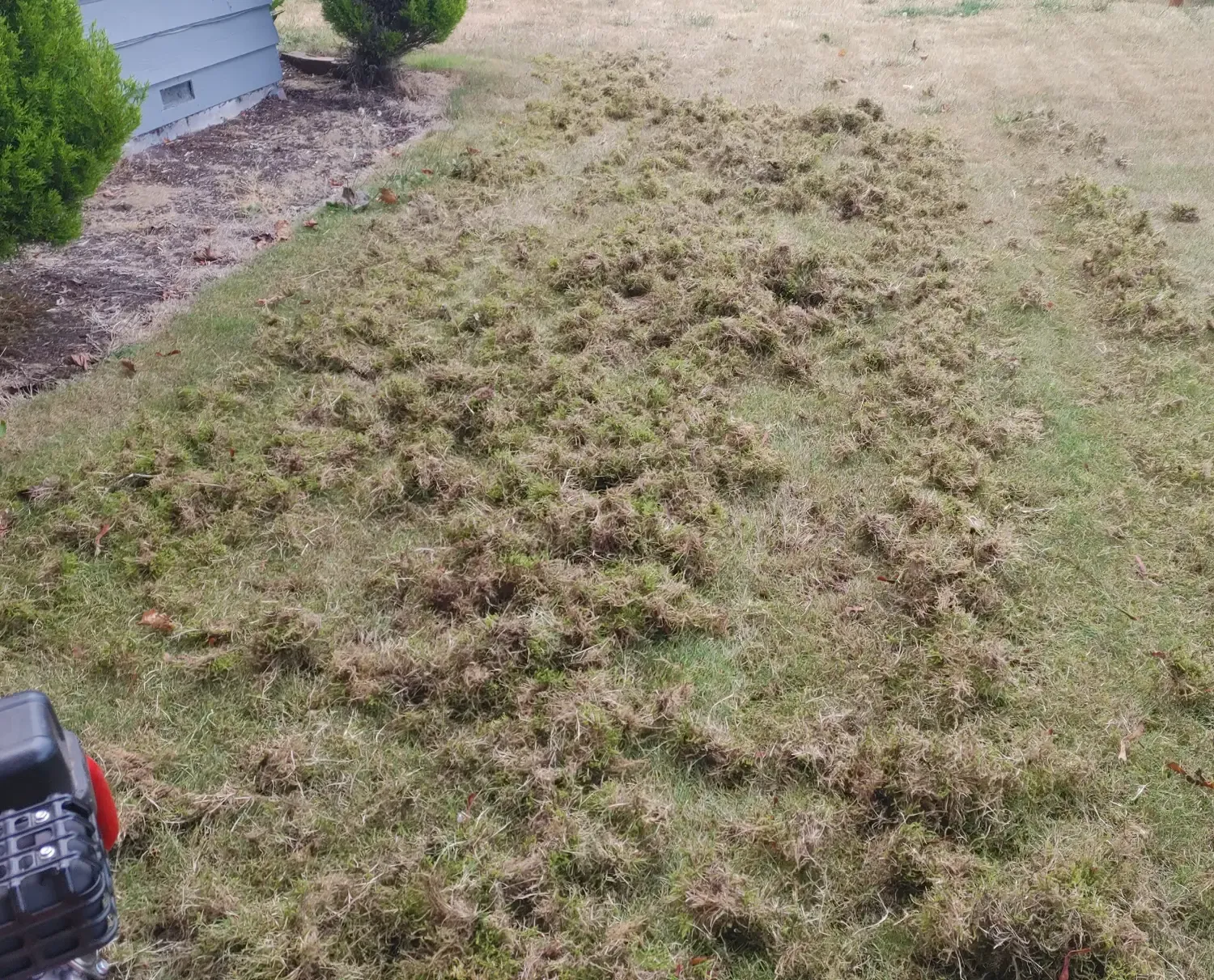
What came up
I ran the dethatcher twice, once in X and once in Y as a grid, and mowed up the results after each pass. It made approximately 2.5 cubic yards of moss and grass bits! A perfect source of greens to mix in the compost with the upcoming torrent of leaves.
How the tines held up
Working away from the trees, the tines mostly held up fine, with no major bends, and the wheels kept them from digging in.
Under the maple trees was another story. Big roots hiding under the surface caused major bends in a number of tines.
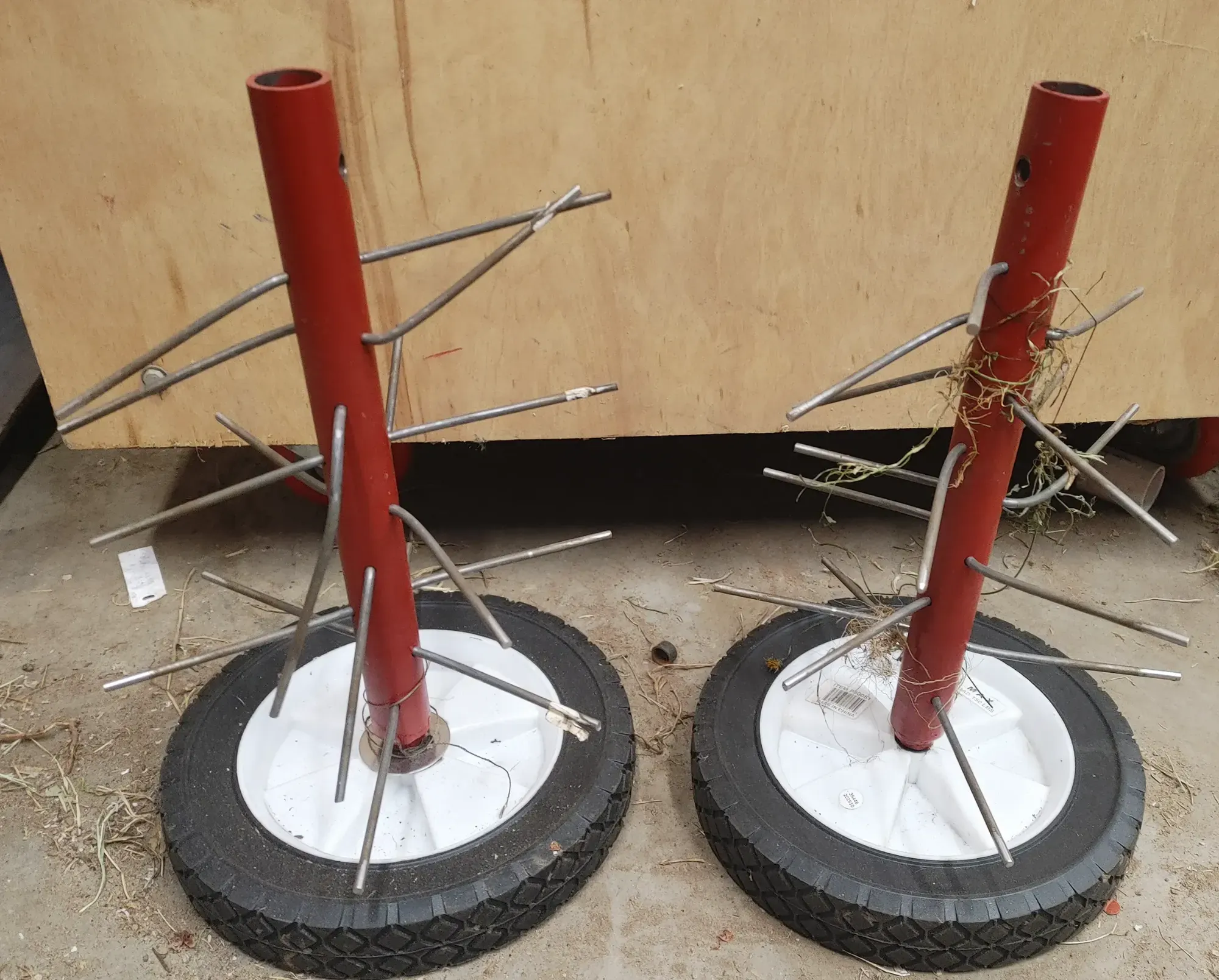
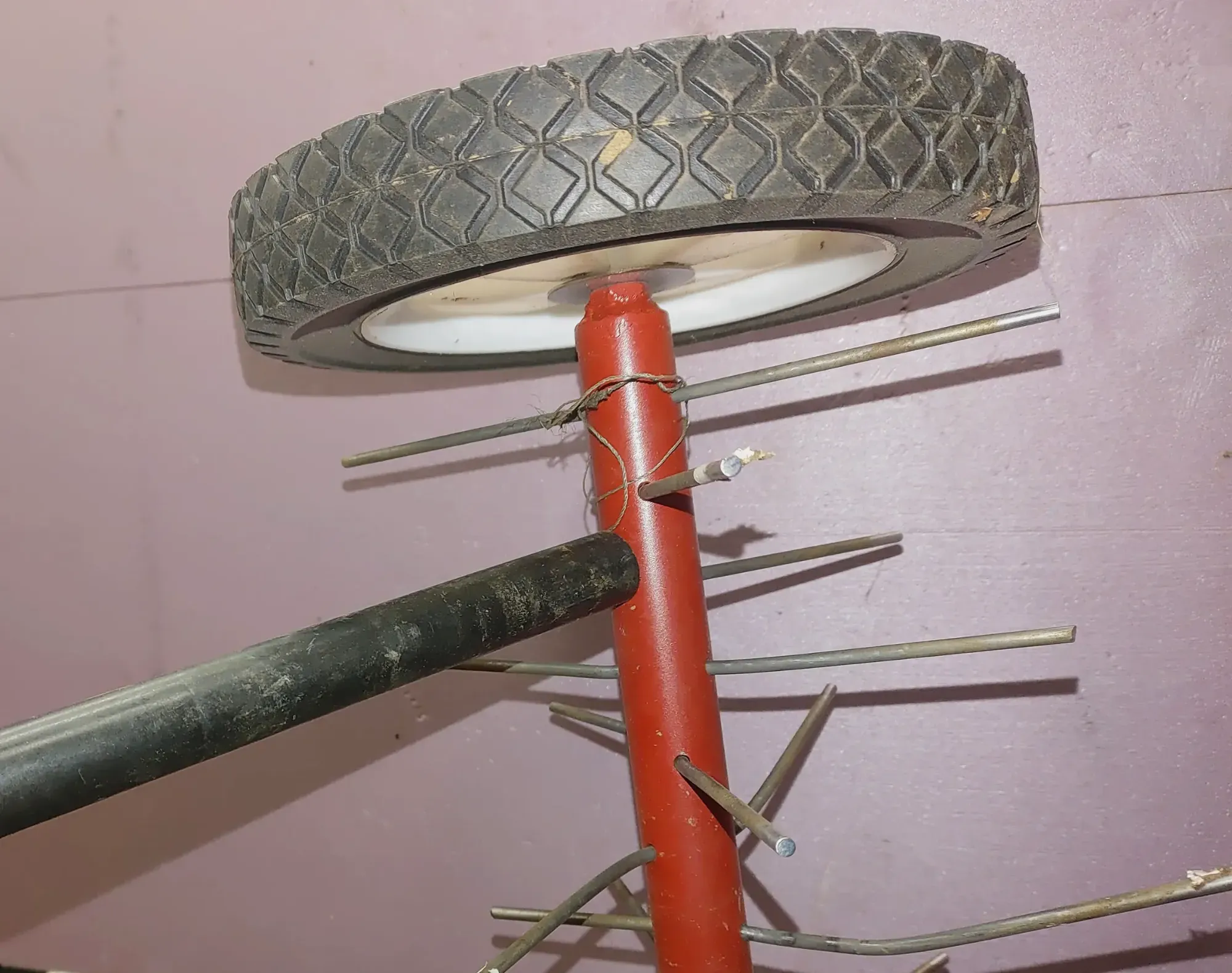
It turned out to be an easy fix. Slipping a pipe over a tine gave me enough leverage, and they readily bent back into place. They’re also cheap to replace if one ever isn’t worth saving.
Overseeding
Afterwards I overseeded with a grass and Microclover mix (sheep and hard fescue, perennial ryegrass and Microclover) and raked it in.
Dethatching takes the moss out but doesn’t stop it coming back. That depends on soil pH, shade, compaction and how thick the grass is, so thicker grass from the overseeding is part of the fix, and this was the prep for it.